External Affairs Minister · Ministry of External Affairs · BJP
100 articles found
On Wednesday, Wang Yi and S Jaishankar met in Manila during ASEAN-related meetings to discuss strengthening bilateral ties between China and India. They emphasized handling sensitive issues properly, maintaining high-level exchanges, and enhancing cooperation in areas like economy, media, and cultural exchanges. Both ministers called for demonstrating responsibility as major countries and contributing positively to global affairs under the BRICS framework, with China supporting India's upcoming BRICS summit this September.

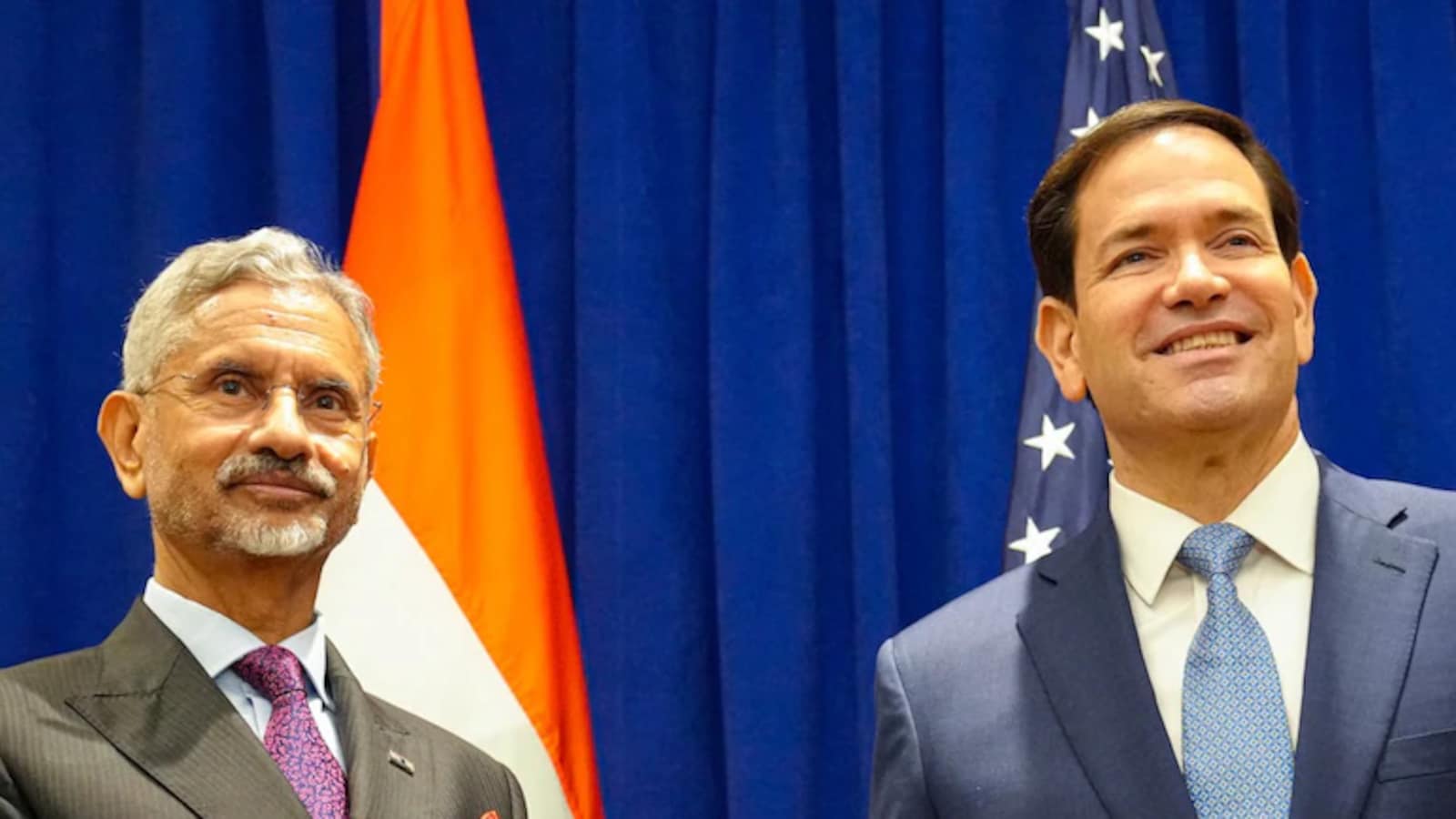
Marco Rubio, US Secretary of State, said India did not raise concerns over President Trump’s proposed tariffs on generic drugs during their Manila meeting with S Jaishankar. They discussed trade, defence, and energy but no specific mention was made about pharmaceuticals. Rubio expects India to be concerned but noted they were “very close.

Marco Rubio, US Secretary of State, said India did not raise concerns over President Trump’s proposed tariffs on generic drugs during their Manila meeting with S Jaishankar. They discussed trade, defence, energy, and other issues. Rubio noted India might have raised concerns elsewhere but remains close to the US.

The Indian Express UPSC Key for July 22, 2026, discusses topics relevant to the UPSC exam including the Ken-Betwa Link Project, Chabahar Port, and India's national song. It highlights a UNODC report on Southeast Asia-based criminal groups using technology to expand globally, causing estimated losses of $88.3 billion to $114.1 billion in 2025. The article also covers the caste census, female Labour Force Participation Rate, and Indian foreign policy developments.

On July 22, 2026, Indian Foreign Minister S. Jaishankar joined U.S. Secretary of State Marco Rubio, Australian Foreign Minister Penny Wong, and her Japanese counterpart Toshimitsu Motegi in Manila to reaffirm the Quad's commitment to a free and open Indo-Pacific while emphasizing ASEAN centrality amid China’s military activities. They discussed maritime security, economic prosperity, technology, and humanitarian response, planning future summits.

On Wednesday, S Jaishankar, US Secretary of State Marco Rubio, Australian Foreign Minister Penny Wong, and Japanese Foreign Minister Toshimitsu Motegi met in Manila for the Quad foreign ministers' meeting. They pledged to support ASEAN's centrality and a free Indo-Pacific region amid concerns over China’s assertive behavior, emphasizing cooperation on maritime security and economic prosperity.

On Wednesday in Manila, S Jaishankar met Wang Yi on the sidelines of the East Asia Summit and ASEAN Regional Forum meetings. Jaishankar raised India’s concerns about supply chain predictability, fair market access, trade imbalances, and facilitating exchanges. He emphasized peace along the border as essential for normalizing ties, noting recent progress since October 2024's disengagement agreement. Despite expanding economic relations, China’s $151.1 billion trade with India in 2025–26 saw a significant trade deficit of $112.16 billion.

On July 22, 2026, S. Jaishankar, India's External Affairs Minister, highlighted the need for deeper cooperation between India and ASEAN during his visit to Manila for a Quad meeting and ASEAN Post-Ministerial Conference. He stressed that no single nation can handle current global turbulence alone, emphasizing maritime law adherence and collaboration on trade, tech, and sustainability under the theme 'Navigating Our Future Together.'

S Jaishankar, India's External Affairs Minister, called for deeper India-ASEAN cooperation amid global turbulence during his visit to Manila. He highlighted supply chain, energy, food, and health security as key concerns and noted 2026 as the ASEAN-India year of maritime cooperation. The meeting aimed to strengthen trade and security ties amidst increasing volatility. Jaishankar also participated in Quad deliberations.

On July 7, Indian diplomats were evacuated from their premises at the Permanent Mission of India to the UN due to structural damage in a nearby Pfizer high-rise under construction. Despite other evacuations being lifted within days, Indian officials remain displaced for three weeks with no reopening date announced by New York City authorities, causing significant disruption and inconvenience.
On Monday night (Indian time), a vehicle carrying Nazia Salma, her husband Shaik Naveed, and their three children in California collided with another vehicle, killing Nazia, her daughter, and son. Naveed and their younger daughter were seriously injured and hospitalized. The family's father, Shaik Abdul Sayeed, contacted his son who informed him of the accident via police. He requested S Jaishankar, India’s External Affairs Minister, to issue emergency visas for the remaining family members to travel to America. Amjed Ullah Khan from MBT also appealed to S Jaishankar for immediate visa issuance.

Shabnam Begum, a 26-year-old from Hyderabad, India, alleged she was forced to work 15-hour days without pay for four months in Oman after being promised a housemaid job. She claimed abuse and torture by her employers and lack of mobile phone access for 1.5 months. Begum escaped and sought help at the Indian Embassy in Muscat. Amjed Ullah Khan, a politician, appealed to India’s External Affairs Minister to ensure her safety and repatriation. The embassy acknowledged the issue and is addressing it.

On Tuesday, Iran targeted two vessels, MT Al Bahiyah and MT Mombasa, in the Strait of Hormuz, injuring 18 Indian crew members and killing one. India condemned the attacks, summoned the Iranian envoy to lodge a protest, and called for dialogue to restore peace. Trump announced free shipping traffic except for Iran, replacing fees with trade deals.

External Affairs Minister S. Jaishankar met UN Secretary-General Antonio Guterres in New York to discuss conflicts in West Asia, Ukraine, and Sudan, as India launched its campaign for a non-permanent seat on the UN Security Council (UNSC) for 2028-2029. Jaishankar outlined India's SHANTI vision focusing on Global South issues and multilateral reforms during the meeting at UN Headquarters.

On July 13, 2026, S. Jaishankar, India's External Affairs Minister, launched the country’s campaign for a non-permanent seat at the UNSC for 2028–29 and emphasized India’s commitment to global peace, equity, and reform during an event at UN headquarters attended by diplomats. He highlighted issues like terrorism, climate action, and maritime security. Elections are scheduled for June 2027 with India competing against Tajikistan. Jaishankar will meet Antonio Guterres later that day and attend the 3rd India-EU Trade and Technology Council meeting in Brussels from July 14-15.

Following the US strikes on Iran, maritime traffic through the Strait of Hormuz slowed significantly. Iran’s Islamic Revolutionary Guard Corps (IRGC) launched retaliatory attacks on US military bases in Bahrain and Kuwait, warning that further strikes would be carried out against other American bases if necessary. The US military claimed to have struck over 90 Iranian targets, aiming to disrupt Iran's ability to attack commercial shipping and civilians. President Donald Trump declared the ceasefire agreement with Iran "over" and stated he doesn't believe they will honor any future agreements. The US also warned that it is prepared for further strikes. India expressed concern over the escalating tensions in West Asia.

Prime Minister Narendra Modi received Indonesia's highest honour, the Bintang Adipurna medal, from President Prabowo Subianto. The award recognizes Modi's role in strengthening India-Indonesia friendship and ties. The External Affairs Ministry stated that the medal is a tribute to the India-Indonesia friendship. Jaiswal, spokesperson for the External Affairs Ministry, expressed gratitude to President Subianto and the Indonesian people, while Minister S Jaishankar highlighted the award as a testament to Modi's efforts in deepening their Comprehensive Strategic Partnership.

Prime Minister Narendra Modi was awarded Indonesia's highest honor, the 'Bintang Adipurna of the Republic of Indonesia', medal by President Prabowo Subianto on Tuesday, July 7, 2026. The award recognizes Modi's leadership in strengthening India-Indonesia ties and furthering the unity, continuity, and prosperity of Indonesia. The External Affairs Ministry praised Modi's efforts in deepening the Comprehensive Strategic Partnership between India and Indonesia, while Jaiswal stated that the honor is a testament to Modi's steadfast commitment towards fostering stronger ties with both Indonesia and ASEAN nations.

S. Jaishankar, India's External Affairs Minister, met with Mohammed bin Abdulrahman Al-Thani, Qatar's Prime Minister, on Sunday to discuss bilateral cooperation in areas such as energy, trade, investments, connectivity, and security. The visit comes amid evolving political dynamics in West Asia following the U.S.-Iran conflict resolution agreement. Jaishankar also discussed assessments of the conflict's impact with Al-Thani, who is also Qatar's foreign minister. The visit will continue with meetings with counterparts from other Gulf countries to enhance bilateral relations and exchange views on regional developments.

Nepal's new Prime Minister, Balendra Shah, is seeking to elevate bilateral ties with India, emphasizing a "dynamic bridge" role for Nepal. Rabi Lamichhane, Chairman of the Rastriya Swatantra Party, recently concluded a visit to India at the invitation of Bharatiya Janata Party (BJP) leaders, signaling a strategic effort to strengthen relations in the new political context. High-level engagements between Nepal and India have yielded preliminary agreements on several areas, including infrastructure development and water management. While both sides acknowledge historical issues like the boundary disputes, they are committed to finding mutually acceptable solutions through dialogue and diplomacy. Both nations should prioritize economic cooperation, particularly in energy and infrastructure, to unlock shared benefits and foster deeper integration.

Prime Minister Narendra Modi and US President Donald Trump celebrated the 250th anniversary of American independence, emphasizing the shared belief in democracy and the rule of law that strengthens their partnership. Modi extended congratulations to Trump and the people of the United States on behalf of India's 1.4 billion citizens, while External Affairs Minister S Jaishankar conveyed greetings to the US government and people. US envoy Sergio Gor joined Trump at Mount Rushmore and other events marking the anniversary.

External Affairs Minister S Jaishankar is embarking on a six-nation tour from July 5th to 15th, visiting Qatar, Bahrain, Kuwait, Oman, the US, and Belgium. The trip aims to assess the status of the US-Iran peace framework following recent attacks that threatened negotiations. Jaishankar will meet with counterparts and leaders in each country, focusing on bilateral relations and regional developments. He will then travel to the US for a campaign launch for India's bid for a seat on the UN Security Council from 2028-29, concluding his tour with a visit to Brussels for the 3rd India–EU Trade and Technology Council Meeting.

Vikram Misri, India's Foreign Secretary, has been granted a one-year extension to his tenure, serving until July 2027. This follows in the footsteps of S Jaishankar, who received an extension in 2017. Misri's responsibilities have included diplomatic engagements with the second Donald Trump administration and trade negotiations with the European Union, as well as handling India's response to U.S.-Israel attacks against Iran. The coming year will see India navigate complex trade talks with the United States, host former President Trump, and address regional tensions in the Gulf.

Prime Minister Modi and President Pezeshkian of Iran held a phone conversation following the recent US-Israeli air strike on Tehran that killed Supreme Leader Ayatollah Ali Khamenei. Modi expressed condolences for the loss and invited Pezeshkian to attend the upcoming BRICS Leaders’ Summit hosted by India. They discussed the progress made in the negotiations between the US and Iran, reiterating the importance of freedom of navigation in the Hormuz Strait. The two leaders also agreed on the need for dialogue and diplomacy to resolve regional issues.

S. Jaishankar, India's External Affairs Minister, spoke with Helen McEntee, Ireland's Foreign Minister, on Tuesday to congratulate her on assuming the Presidency of the Council of the European Union. The two discussed ways to deepen their cooperation in trade and education. Jaishankar expressed his commitment to continuing their partnership in multilateral matters.

Congressman Ro Khanna stated that the U.S.-India relationship is at its lowest point in 30 years due to President Donald Trump's policies, which he claims have been "utterly destructive." Khanna said that during his recent visit to China, India's Ambassador informed him that a generation of trust was lost due to these policies. He also criticized Trump's actions regarding Iran, Cuba, and Greenland, arguing that they have damaged America's global leadership.

John Brittas, S. Jaishankar, and Rajagopal Ramadas are involved in a dispute over the denial of a passport renewal to Mr. Ramadas, whose name was removed from electoral rolls during a Special Intensive Revision (SIR) in West Bengal. Brittas, leader of the CPI(M), argues that this decision raises broader constitutional questions about the Passports Act and its administration. He contends that a passport is a statutory determination with legal significance and cannot be disregarded by administrative decisions based on provisional factors.

External Affairs Minister S. Jaishankar announced that relief supplies, medical equipment, and a field hospital unit have arrived in Venezuela under the Operation Amistad initiative. The Indian Air Force transported the aid via two C-17 Globemaster III aircraft from Delhi to Caracas, carrying over 66 tonnes of humanitarian assistance. The consignment includes an Indian Army field hospital, relief supplies, medicines, and medical equipment, demonstrating India's commitment to providing support during the ongoing earthquake relief efforts in the country.

Prime Minister Narendra Modi visited Seychelles on a three-day official visit, attending the golden jubilee celebrations of the island nation's National Day. Modi described the India-Seychelles friendship as "steady, strong and long-lasting" and affirmed India's commitment to strengthening the nation's maritime security capabilities through the transfer of a 'Made in India' fast patrol vessel. The visit included discussions on bilateral cooperation and regional issues with President Patrick Herminie, who reciprocated the sentiment of enduring friendship between the two nations.

India's Armed Forces have dispatched two C-17 Globemaster III aircraft carrying a specialized medical contingent, relief supplies, and medicines to assist Venezuela following back-to-back earthquakes. The Indian Air Force is undertaking one of its longest humanitarian aid flights, with the Army’s medical team from 60 Para Field Hospital departing from Hindon Air Force Station. The team comprises 41 personnel, including nine medical officers, equipped to provide emergency medical care and other essential healthcare services to those affected by the earthquakes. The dispatch reflects India's commitment to humanitarian assistance and disaster relief.

India launched Operation Amistad, a humanitarian assistance and disaster relief mission in response to the devastating earthquakes that struck Venezuela. Two IAF C-17 Globemaster aircraft, carrying a 41-member rescue team and over 35 tons of supplies, departed on Friday morning to assist with ongoing relief efforts. The Indian government expressed condolences for the loss of life and wished a speedy recovery to those injured. India stands ready to provide further assistance as needed.

S. Jaishankar, India's External Affairs Minister, emphasized the need for closer cooperation between India and South Korea in fields like shipbuilding, health, infrastructure, and defense during his visit to South Korea. He called for greater opportunities for the Global South, urging influential nations to prioritize global stability through agenda-specific cooperation. Jaishankar also met with former UN Secretary-General Ban Ki-moon and former Mongolian Prime Minister Gombojav Zandanshatar on the sidelines of the Jeju Forum for Peace and Prosperity 2026.

The Ministry of External Affairs clarified that a passport is not proof of citizenship, emphasizing its purpose as a travel document. The government highlighted the new chip-based e-passports' features to enhance global acceptance and reduce fraud risk. India has expanded visa-free entry for citizens to 27 countries from 16 in 2019, with visa on arrival policies available for 47 countries and electronic visas for 66. The ministry will host a forum to discuss legal pathways for migration and facilitate networking between foreign employers and Indian nationals seeking jobs abroad.

India and the United Kingdom held a meeting of their Executive Steering Group (ESG) to discuss deepening defense cooperation. The 15th ESG meeting took place in the UK from June 17-19, focusing on enhancing interoperability, joint exercises, subject matter expert exchanges, and training collaboration between their militaries. The discussions aimed to chart a robust roadmap for strengthening the enduring partnership between the Indian Army and the British Army.

S. Jaishankar, the External Affairs Minister of India, met with his Mongolian counterpart, Battsetseg Batmunkh, to review progress in bilateral cooperation on development projects, capacity building, security, and multilateral fora. The two leaders discussed opportunities in mining, clean energy, and agri processing, reaffirming their commitment to advancing the strategic partnership between the countries. Jaishankar also met with Mongolian President Khurelsukh Ukhnaa, Speaker Sandag Byambatsogt, Education Minister L Enkh-Amgalan, former President N Enkhbayar, and Chief Abbot Khamba Nomun Khan Geshe Lharampa D. Javzandorj. The visit underscores India's commitment to strengthening ties with its Asian partners.

External Affairs Minister S. Jaishankar and members of the diplomatic corps in New Delhi participated in a yoga session to mark the 12th International Day of Yoga. Prime Minister Narendra Modi led celebrations in Kolkata, while the Australian High Commission and French Embassy released videos showcasing their participation in yoga sessions. The day's theme was "Yoga for Healthy Ageing," emphasizing the importance of yoga for all ages.

Congressman Raja Krishnamoorthi condemned white supremacist chants targeting Indian-Americans outside a Texas city hall, stating hate has no place in the United States. He urged Americans to stand against bigotry and prejudice, echoing concerns raised by US Secretary of State Marco Rubio who previously addressed similar incidents during his visit to India. Rubio emphasized that offensive remarks by individuals should not be viewed as representative of American society.
The US Navy killed three Indian mariners on a merchant ship off the coast of Iran and Oman, but did not express regret for the loss. The incident highlights concerns about US actions against commercial vessels in the Gulf of Oman, particularly given India's close relationship with the US as a strategic partner. India has condemned the attacks, demanding that the US take measures to prevent further civilian casualties. Despite these protests, the US maintained its stance on enforcing the blockade and asserted that violations would not be tolerated. The situation underscores tensions between the two countries regarding maritime security in the region.

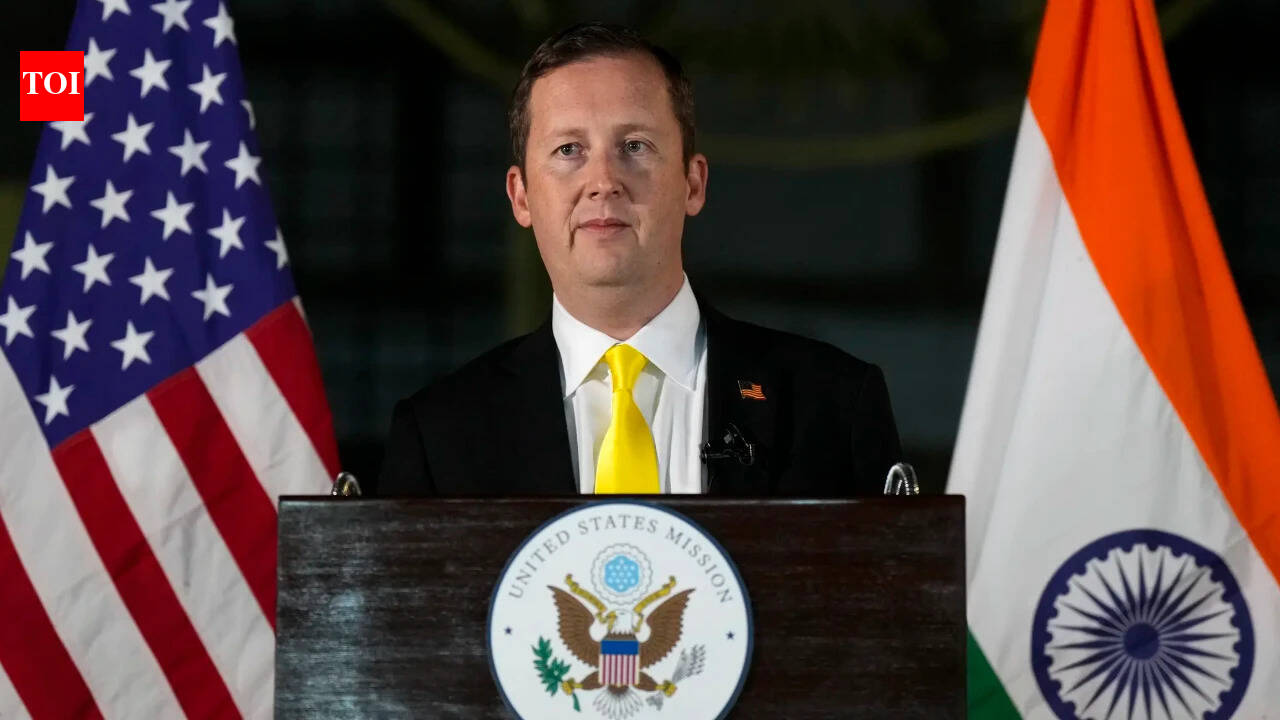
India summoned U.S. Embassy representative Jason Meeks following U.S. missile attacks on merchant vessels carrying Indian crew members, resulting in a "strong protest" from India. U.S. Secretary of State Marco Rubio assured India that violations of the American blockade and "illicit transport of Iranian oil" would not be tolerated. Jaishankar, India's External Affairs Minister, reiterated his country's strong protest against the attacks, which killed three Indian mariners.

The Congress has accused the Narendra Modi government of failing to defend India's sovereignty and dignity following a U.S. attack on an Indian vessel in the Gulf of Oman, citing Marco Rubio's "threatening" language during a conversation with External Affairs Minister S. Jaishankar. Congress leaders have called for scrapping the India-U.S. trade deal and demanded stronger action from the government, including a condemnation of the incident by Prime Minister Modi at his upcoming meeting with President Trump.

India summoned the top American diplomat twice after attacks killed three Indian seafarers in the Strait of Hormuz, demonstrating its assertive foreign policy under Prime Minister Narendra Modi. The country balanced ties with Israel, Iran, and Gulf states during the Middle East crisis without condemning any party. This approach allowed India to secure a US waiver to continue buying Russian oil, easing energy costs amid the Strait of Hormuz blockade. India's strategy involved cultivating relationships with key players like the United States, Israel, and Saudi Arabia while simultaneously maintaining communication with Iran and other Gulf states.

Prime Minister Narendra Modi and US President Donald Trump are set to meet at the G7 summit in France, after a year-long hiatus due to strained bilateral ties. The meeting comes amid escalating tensions over American missile strikes on commercial ships in the Gulf region that killed three Indian seafarers. External Affairs Minister S Jaishankar discussed the incident with US Secretary of State Marco Rubio, expressing India's strong protest against the attacks and emphasizing that such actions are not justified. The US Department of State, meanwhile, defended its actions, stating that all commercial vessels must comply with US orders to uphold peace and security in the Strait of Hormuz. Jamieson Greer, US Trade Representative, will travel to India after the summit to discuss a potential trade deal.

Marco Rubio, US Secretary of State, and Subrahmanyam Jaishankar, Indian External Affairs Minister, engaged in a phone conversation following India's protest against the US Navy's attacks on commercial vessels near Oman. Jaishankar expressed India's strong disapproval of the lethal actions against civilian shipping, while Rubio defended the US naval presence in the Strait of Hormuz as aimed at maintaining security and enforcing its blockade against Iranian oil shipments. The incident has escalated diplomatic tensions between the two countries, highlighting the importance of the Strait of Hormuz for both India's energy security and maritime interests.

Marco Rubio and Subrahmanyam Jaishankar engaged in a phone conversation following India's protests over the US Navy's attacks on commercial vessels near Oman, which resulted in the deaths of three Indian sailors. Jaishankar expressed India's strong protest against the lethal actions taken by the US Navy, while Rubio defended the US naval presence in the Strait of Hormuz as necessary for maintaining security and enforcing its blockade against Iranian oil shipments. The incident has heightened tensions between the two countries, with India emphasizing the importance of international maritime commerce and safety.

India summoned U.S. Embassy representative Jason Meeks and lodged its “strong protest” against the missile attacks on ships carrying Indian crew, resulting in a discussion between External Affairs Minister S. Jaishankar and U.S. Secretary of State Marco Rubio. Mr. Jaishankar reiterated India’s strong protest over the U.S. Navy's actions, which killed three Indian mariners. The two nations disagree on the legality of the attacks, with India demanding an apology and the U.S. emphasizing compliance with orders to maintain peace and security in the Strait of Hormuz. This disagreement comes ahead of a meeting between Prime Minister Narendra Modi and President Donald Trump at the G7 summit next week.

Prime Minister Narendra Modi arrived in Nice on Saturday evening, marking the beginning of a six-day tour of France and Slovakia. The visit focuses on Bharat Innovates 2026, a tech summit with French President Emmanuel Macron, where they will discuss cooperation in research, investment, and technology transfer. The trip also includes bilateral meetings between India and France, potentially addressing the ongoing U.S.-Iran conflict. Modi will continue his tour to Slovakia and then travel to Évian-les-Bains for the G7 Summit before concluding with a tech event in Paris.

Finland's Foreign Minister, Elina Valtonen, defended India's continued purchase of Russian oil as compliant with Western price cap rules. She stated the goal was to limit Russia's earnings from oil sales while ensuring global energy supply stability. Jaishankar, India's External Affairs Minister, emphasized that India's purchases were driven by economic needs and market dynamics following sanctions on Russia in 2022. He also criticized Western criticism of India's energy ties with Moscow, pointing to contradictions in their own policies.

Two sisters from Anand district, India, were rescued by Lao police after being held hostage in Laos for a year. The sisters had been taken to Myanmar against their will and then sent to Laos via Cambodia. The incident was the result of an urgent diplomatic intervention by the Indian Embassy in Laos and coordinated efforts between the Ministry of External Affairs and the Indian Embassy. Anand BJP MP Mitesh Patel, who requested the rescue, stated that the sisters were subjected to torture and confinement. The sisters were brought back to India on Friday after being rescued from the Houaphan Province.

Congress MP Shashi Tharoor criticized the US government's response to the killing of three Indian seafarers in a US missile strike, questioning why non-lethal methods weren't used and demanding an apology. Congress Media and Publicity department chairman Pawan Khera echoed Tharoor's sentiments, calling the US statement "illegal, reckless, and unacceptable" and urging India to demand an unconditional apology for the deaths.

Congress MP Shashi Tharoor criticized the US Secretary of State Marco Rubio for failing to express regret or condolences over the deaths of three Indian seafarers in a US missile strike. Tharoor questioned why non-lethal means couldn't have been used and asked if targeting civilian crew members is acceptable. Congress Media and Publicity department chairman Pawan Khera also condemned the US response, calling it "illegal, reckless, and unacceptable." He demanded an unconditional apology for the deaths of the Indian sailors.

US Secretary of State Marco Rubio warned against violating the American blockade in the Straits of Hormuz, following attacks on Indian ships off Oman. Rubio conveyed this message to External Affairs Minister S Jaishankar, who expressed strong protest over the deaths of three Indian seafarers. The US demands all commercial vessels comply with orders from US forces to uphold peace and security in the Strait.

India's External Affairs Minister S Jaishankar spoke to US Secretary of State Marco Rubio following the second summoning of the US charge d’affaires, Jason Meeks, over the killing of three Indian seafarers in a US Navy missile strike near Oman. Jaishankar expressed India's strong protest against the attacks on commercial vessels and stated that such lethal actions are not justified. The incident has led to an uproar in India and heightened tensions between the two countries.

US and Iran officials expressed optimism about a deal to end the war in the Middle East, with mediator Pakistan also expressing hope. The agreement is expected to include lifting the US naval blockade of Iranian ports and changes to the administration of the Strait of Hormuz. The draft deal would require Iran to dismantle its nuclear program and hand over its nuclear material in exchange for sanctions relief. While a final agreement remains pending, both sides have expressed confidence that it will be signed soon.

India has maintained its diplomatic engagement with Bangladesh, despite the new government led by Tarique Rahman. External Affairs Minister S. Jaishankar, Foreign Secretary Vikram Misri, and Lok Sabha Speaker Om Birla visited Dhaka during the interim period, but sources within the ruling Bangladesh Nationalist Party (BNP) argue that these gestures are insufficient. They believe India should reverse its previous retributory measures against Bangladesh, such as the restarting of transhipments and restrictions on Bangladeshi goods, to incentivize Rahman's government to normalize ties with India.

The recent elections in Gilgit-Baltistan, a region Pakistan illegally annexed in 1949, have sparked protests and demands for constitutional change. Pakistan has responded by labeling the protesters as "Indian agents" and imprisoning leaders of nationalist groups. While the Pakistan People's Party (PPP) appears to have won the most seats, the people are demanding greater autonomy and rights, including control over land ownership and access to ancient trade routes. The region's status remains unchanged despite these demands, highlighting a lack of progress towards granting Gilgit-Baltistan its rightful place as an independent entity.

A float depicting the assassination of former Prime Minister Indira Gandhi was displayed during a Sikh religious procession in Brampton, Canada. S Jaishankar, India's external affairs minister, expressed concern over the display and its potential to promote separatist ideologies. Jaishankar stated that he believes such displays are driven by political motivations and harmful to inter-community relations.
A float depicting the assassination of former Prime Minister Indira Gandhi was featured in a parade held in Brampton, Canada. S Jaishankar, the external affairs minister of India, expressed concern over the display, stating that it reflects a larger issue of political motivations and the space given to separatists and extremists. Canada has a significant Sikh population, with approximately 2.1% being of Indian origin as of 2021.
External Affairs Minister S. Jaishankar and his Indonesian counterpart, Sugiono, met to discuss the full spectrum of bilateral relations during an 8th India-Indonesia Joint Commission meeting in Jakarta on June 7, 2026. The two ministers covered cooperation in defense, security, trade, investment, healthcare, digital domains, energy, connectivity, space, education, and culture. They reaffirmed their commitment to closer cooperation and coordination in regional and multilateral fora. Mr. Jaishankar stated the talks were "substantive" and that the meeting followed a four-year gap. The Indonesian side is looking forward to Prime Minister Narendra Modi's upcoming visit, which will provide an opportunity for further deepening cooperation.

India and Nepal have agreed to enforce a mutual legal assistance pact to tackle cross-border crimes. The visit of the Nepalese Foreign Minister to India focused on strengthening bilateral ties, including cooperation in health, technology, and remittances. The government's evaluation of the Deendayal Antyodaya Yojana-National Rural Livelihoods Mission found that many self-help groups did not use funds for income-generating activities but instead spent them on household expenses. The Indian government is considering extending Project Glasswing to more countries, including India, as part of its efforts to enhance cybersecurity capabilities.

Mohammad Rahib and Mohammad Zafar, two Indian nationals from Uttar Pradesh, were detained by Saudi police in Dammam after sending money to the Iranian embassy's bank account. Their family has not received any information about their whereabouts since March 30th. The brothers' father, Hassan Abbas, appealed to External Affairs Minister S Jaishankar, while the All India Shia Personal Law Board (AIMPLB) raised the issue with Defence Minister Rajnath Singh. The Indian Embassy in Riyadh is also investigating the situation and awaiting further information from the Saudi Foreign Ministry.

S Jaishankar and Sugiono, the Indonesian Foreign Minister, co-chaired the 8th India-Indonesia Joint Commission Meeting in New Delhi on Sunday. The two leaders discussed strengthening cooperation in defense, maritime security, digital connectivity, infrastructure, trade, and people-to-people exchanges. They also agreed to deepen ties through a possible visit by Prime Minister Narendra Modi to Jakarta next month. The meeting reaffirmed the Comprehensive Strategic Partnership between the two nations, which was bolstered by discussions between President Prabowo Subianto and PM Modi.

India and Indonesia held their 8th Joint Commission Meeting in New Delhi to strengthen their Comprehensive Strategic Partnership. External Affairs Minister S Jaishankar and Indonesian Foreign Minister Sugiono co-chaired the meeting, which covered a wide range of topics including defense, trade, maritime affairs, health, digital infrastructure, and education. The meeting aimed to produce tangible outcomes from discussions on political ties, security cooperation, and economic collaboration ahead of Prime Minister Modi's anticipated visit to Jakarta next month.

Nepal's Foreign Minister Shishir Khanal visited India to strengthen bilateral ties amid a recent boundary row controversy. He emphasized a mutually beneficial relationship, stating that no problem is too large if both sides sit down with an "open heart." Khanal also praised India's economic growth and expressed Nepal's desire to engage with India's technological advancements.

India's External Affairs Minister S Jaishankar and Nepal's Foreign Minister Shishir Khanal met to discuss strengthening bilateral ties. The ministers reviewed various areas of cooperation, including development, connectivity, trade, energy, health, and people-to-people exchanges. They also signed agreements on cross-border crime investigation, a UPI-NPI linkage for remittances, and a digital infrastructure project. This visit follows the recent meeting between Rabi Lamichhane, leader of Nepal's ruling party, and Indian leadership in Delhi.

S. Jaishankar, External Affairs Minister of India, and Shisir Khanal, Nepali Foreign Minister, discussed strengthening bilateral ties during their meeting in Delhi on June 6, 2026. Jaishankar highlighted the strong complementarities between the two governments' objectives, emphasizing a "decisive shift" in relations to realize their full potential. Khanal, who arrived in Delhi on Friday, expressed Nepal's commitment to building a "transformative relationship" with India, focusing on areas such as development cooperation, connectivity, energy, and cultural exchange.

Nepal's Foreign Minister Shisir Khanal and India's External Affairs Minister Dr. S. Jaishankar met in New Delhi, marking a shift from political friction to purposeful partnership. The meeting resulted in three landmark announcements: cross-border UPI-linked digital payments, the handover of 84 post-earthquake reconstruction projects, and an AI language technology agreement between Indian and Nepali institutions. Khanal's visit is seen as laying the groundwork for a future visit by Nepal's Prime Minister Balen Shah to New Delhi.

BJP is expected to sweep the June 18 Rajya Sabha elections in Gujarat, winning all four seats with its highest-ever tally of 161 MLAs. The party's dominance leaves Congress without enough numbers to win any seat, marking a historic first for the state as it will likely have zero representation in the Upper House. The Election Commission has notified the elections, and nominations are due on June 8th.

S. Jaishankar, India's External Affairs Minister, and Yvette Cooper, the British Foreign Secretary, met on June 4, 2026, to discuss the strengthening of their bilateral relationship. They highlighted the successful conclusion of the India-U.K. Comprehensive Economic and Trade Agreement (CETA), a comprehensive strategic partnership, and a defense industrial roadmap as key achievements. Dr. Jaishankar emphasized that the partnership has evolved from historical ties into a forward-looking economic highway. Cooper also praised CETA as a pillar of economic growth and stressed the importance of securing critical minerals for clean energy transitions. The launch of the India-U.K. Critical Minerals Global Supply Chain Observatory (GSCO) was another significant development, aimed at strengthening cooperation in this area.

Yvette Cooper, Secretary of State for Foreign, Commonwealth and Development Affairs, concluded a two-day official visit to India, leaving behind agreements that signal the rapid maturation of the bilateral partnership. Cooper held extensive talks with Dr S Jaishankar, External Affairs Minister, and met with Prime Minister Narendra Modi, reviewing the five pillars of the India-UK Vision 2035 framework: Growth, Technology and Innovation, Defence and Security, Climate and Clean Energy, and Education. The visit included the handover of a Letter of Approval to the University of Liverpool for its new campus in Bengaluru, an agreement on a Regional Maritime Security Centre for Excellence between King's College London and India's National Maritime Foundation, and the launch of the UK-India Critical Minerals Supply Chain Observatory. These agreements demonstrate the growing strategic importance of the India-UK relationship.

Shisir Khanal, Nepal's Foreign Minister, arrived in New Delhi for a three-day official visit at the invitation of External Affairs Minister S Jaishankar. The visit aims to repair strained diplomatic ties with India following a boundary row and a recent incident where India's Foreign Secretary failed to secure an audience with Nepal's Prime Minister. Khanal will hold talks covering trade, investment, connectivity, energy, and people-to-people ties, signaling Kathmandu's commitment to re-engage New Delhi at the highest levels.

Two sisters from Gujarat's Anand district have been rescued from a human trafficking syndicate in Laos after being missing for nearly 20 days. Mitesh Patel, the Member of Parliament from Anand, initiated high-level interventions with the Ministry of External Affairs and diplomatic channels to locate the women and ensure their safety. A joint operation involving the Indian Embassy, the Ministry of External Affairs, the Laos police, and the Laos army successfully located and secured the sisters in the Houaphanh province of Laos. The sisters are now under the care of local authorities in Laos and will be repatriated to India soon.

Prime Minister Narendra Modi met with Acting President Delcy Rodriguez of Venezuela in New Delhi on Thursday. The meeting, attended by External Affairs Minister S Jaishankar and Foreign Secretary Vikram Misri, focused on enhancing cooperation in energy, trade, healthcare, and renewable energy. The visit is part of a five-day working visit aimed at deepening bilateral ties between the two nations.

Yvette Cooper, British Foreign Secretary, is visiting India to meet with Narendra Modi, Prime Minister. The visit focuses on maritime security, the expedited execution of the bilateral Free Trade Agreement, and economic collaboration in light of global conflicts. Cooper's visit follows a meeting between Business and Trade Secretary Peter Kyle earlier this week and builds upon the UK-India Vision 2035 partnership. Cooper will also meet with Indian officials to discuss technology, education, defense, and climate change initiatives.

Prime Minister Narendra Modi and Myanmar President U Min Aung Hlaing met in New Delhi, where they pledged deeper cooperation in security, trade, and infrastructure. Modi positioned Myanmar as a key partner in India's foreign policy initiatives, including Neighbourhood First, Act East, and MAHASAGAR. Both sides reaffirmed their commitment to each other's sovereignty and territorial integrity, while also emphasizing the importance of preventing misuse of sovereign territory for activities threatening national security. The visit included discussions on connectivity projects like the Kaladan Multi-Modal Transit Transport project and the India-Myanmar-Thailand Trilateral Highway, as well as trade facilitation and people-to-people initiatives. Modi announced an expansion of scholarships for Myanmar students, while Min Aung Hlaing offered prayers at Buddhist sites in Bodh Gaya.

Indian Prime Minister Narendra Modi met with Myanmar’s military leader Min Aung Hlaing in New Delhi, despite criticism from opposition groups. India stated its policy is not intended to comment on the internal political arrangements in Myanmar and believes engagement is the best way forward. During their meeting, the leaders discussed trade, defense, security cooperation, border management, and regional issues. India and Myanmar also agreed to deepen collaboration across sectors, including trade, energy, and critical minerals, as well as accelerate major connectivity projects.

The Supreme Court of India has issued directions to strengthen the judicial administration and ensure timely delivery of judgments. The court called for expedited hearing and pronouncement of bail applications, with orders communicated to jail authorities immediately. It also mandated reasoned judgments in open courts to be uploaded on High Court websites within 24 hours. These measures aim to address the backlog of pending cases and improve access to justice. The National Family Health Survey-6 (NFHS-6) revealed a rise in adult obesity, particularly in urban areas, with implications for public health and the healthcare system. The monsoon season is expected to be the driest in a decade, potentially impacting agricultural production.

The United States Department of Homeland Security (DHS) clarified that not all immigrants seeking green cards will be required to return to their home countries. The clarification came after a memo from the US Citizenship and Immigration Services sparked backlash from lawmakers and immigration lawyers who feared it would lead to chaos. While the DHS stated that individual officers have discretion in deciding whether someone should be forced to apply abroad, some immigration attorneys are already questioning applicants about their reasons for seeking green cards within the US. Industry leaders warned that this policy could disrupt technology companies reliant on foreign professionals.

Ajit Doval, National Security Advisor of India, called for decisive action against terrorism and a rejection of double standards in the fight against it during an international security forum in Russia. He emphasized the need for reforms to existing structures and institutions established after World War II, ensuring greater representation from the Global South. Doval also highlighted the importance of safe and uninterrupted trade through critical shipping routes like the Strait of Hormuz and the Red Sea, particularly given ongoing conflicts in West Asia. During his visit to Russia, Doval met with Sergei Shoigu, Secretary of the Security Council of the Russian Federation, to discuss defense, security, energy, and trade-economic ties. The meeting also served as an opportunity to exchange views on preparations for the upcoming BRICS national security advisers' meeting in New Delhi.

Quad foreign ministers met in New Delhi on May 26, 2026, to address challenges in the Indo-Pacific region. The meeting resulted in initiatives focused on maritime security and energy resilience, including the launch of the Indo-Pacific Maritime Surveillance Collaboration initiative and the expansion of the Indo-Pacific Maritime Domain Awareness initiative. The group also reaffirmed its commitment to upholding international law and peaceful resolution of disputes. S. Jaishankar (India), Marco Rubio (United States), Toshimitsu Motegi (Japan), and Penny Wong (Australia) emphasized the importance of "safe maritime commerce" and condemned attacks on commercial shipping vessels. The meeting also saw the announcement of the Quad Ports of the Future Partnership, a pilot project for port infrastructure in Fiji.

The Quad, a security alliance formed to counter China's rise in the Asia-Pacific region, is struggling for relevance as President Donald Trump shifts US military focus away from the region. Analysts say the alliance has been weakened by Trump's detente with Chinese President Xi Jinping, and his administration's redeployment of troops from the Asia-Pacific to the Middle East. The Quad's recent meeting in New Delhi aims to revive its purpose, but faces challenges as China views the group as a "structural uneven alignment" held together by concern over China rather than deep internal unity. The alliance has also been hampered by a lack of leadership and formal commitments from member states like India, Japan, and Australia.

Penny Wong, S Jaishankar, Toshimitsu Motegi, and Marco Rubio met to discuss a joint infrastructure project in Fiji, marking the third Quad meeting since September 2024. The group agreed on initiatives for Indo-Pacific Energy Security and critical minerals framework, aiming to strengthen supply chains and address China's growing influence in the region. The ministers also acknowledged the importance of maintaining a "free and open Indo-Pacific" despite tensions with China and reaffirmed their commitment to the Quad partnership.

Quad Foreign Ministers will meet on May 26, 2026, to address the economic fallout of the West Asia crisis, security concerns in the Indo-Pacific, and ways to enhance cooperation in critical minerals and technology. The meeting, presided over by External Affairs Minister S. Jaishankar, will also feature U.S. Secretary of State Marco Rubio and Australian Foreign Minister Penny Wong, alongside Toshimitsu Motegi, who is the Japanese Foreign Minister. The Ministers are expected to discuss how to renew their mandate following recent developments, including the US-Israel strikes on Iran.

S. Jaishankar, Marco Rubio, Penny Wong, and Toshimitsu Motegi will meet in Delhi on Tuesday, May 26, 2026, for the first time since July 1, 2025. The meeting will focus on reviewing the goals of the Quad grouping, which includes maritime and transnational security, economic prosperity and security, humanitarian assistance and emergency responses, and the launch of the Quad Critical Minerals Initiative. The Ministers will also meet with Prime Minister Narendra Modi.

Laura Loomer, a far-right US political activist, sparked controversy after posting on X that she wants to return to India following Marco Rubio’s recent visit. Loomer's comments drew criticism for her past controversial remarks about Indians and immigration, with users revisiting those posts. While Loomer previously criticized India and the H-1B visa program, she later praised India during her trip in March, calling it "incredible" and a potential future superpower. The controversy arose amidst Rubio’s first official visit to India as US Secretary of State, where he met with Prime Minister Narendra Modi and External Affairs Minister S. Jaishankar.
U.S. Secretary of State Marco Rubio stated that bilateral relations between India and the United States remain strong, with hopes for a soon-to-be-sealed trade deal. During his visit to India, Mr. Rubio met with Minister of External Affairs S. Jaishankar, describing his experience as "fantastic." This visit comes amidst economic and diplomatic tensions between the two nations stemming from U.S. tariffs on Indian exports imposed by former President Donald Trump.

Toshimitsu Motegi, Japanese Foreign Minister, stated that the Quadrilateral Foreign Ministers' Meeting (FMM) will prioritize cooperation on critical minerals for green energy and hi-tech. The meeting, hosted by S. Jaishankar, will also address ongoing conflicts in Iran and the Hormuz Strait blockade, as well as the recent visit of Donald Trump to China. The FMM is expected to set the agenda for the Quad Summit, which has not taken place since 2024 due to India-U.S. tensions.

India expressed concern over recent US visa restrictions, particularly those targeting Indian tech workers. Subrahmanyam Jaishankar, India's foreign minister, criticized the Trump administration's approach to immigration while acknowledging broad alignment on other issues with Secretary of State Marco Rubio. Rubio emphasized shared values and strategic partnership between the two countries despite recent policy shifts that have strained relations.

U.S. Secretary of State Marco Rubio stated that the upcoming trade agreement between India and the United States will be "beneficial" and "sustainable," addressing national interests for both nations. Rubio, during a visit to India, emphasized that the agreement is part of a broader effort by the Trump administration to rebalance U.S. trade globally. He highlighted the imbalance in the current trade relationship with India and stated that the US seeks mutually beneficial arrangements with all countries involved. The Secretary of State also noted that the trade delegation from the United States will visit India soon to further discussions on the proposed agreement.

Secretary of State Marco Rubio began a four-day trip to India, meeting with Prime Minister Narendra Modi and other officials. Rubio emphasized the importance of the Indo-Pacific region and renewed the Quad engagement, highlighting India's role in U.S. policy. The visit included bilateral talks with External Affairs Minister S. Jaishankar, attendance at the Quad Foreign Ministers’ Meeting, and a reception hosted by the U.S. Ambassador to India. The trip also included cultural exchanges and visits to Jaipur and Agra.

U.S. Secretary of State Marco Rubio arrived in New Delhi on Saturday (May 23, 2026) for his first official visit to India, aiming to recalibrate bilateral relations that have faced headwinds since mid-last year. He met with Prime Minister Narendra Modi and attended a meeting of the Quad Foreign Ministers. The trip comes after a period of strain between the two countries following trade disputes and President Donald Trump's statements regarding the India-Pakistan conflict. The visit will focus on strengthening ties in areas such as energy, trade, investment, technology, and people-to-people exchanges, with discussions also expected to cover the West Asia crisis and its economic impact.

U.S. Secretary of State Marco Rubio will visit India from May 23 to 26, 2026, aiming to repair strained bilateral ties. He will meet with External Affairs Minister S. Jaishankar, Prime Minister Narendra Modi, and attend a Quad Foreign Ministers meeting in New Delhi. The trip follows a recent three-day visit by India's Foreign Secretary Vikram Misri to Washington DC focused on stabilizing the relationship. The talks are expected to focus on bolstering ties in energy, trade, investment, critical technology, and people-to-people exchanges, as well as discussing the West Asia crisis and its economic impact.

Jonas Gahr Store, Prime Minister of Norway, stated that he hopes India will use its channels with Russia to push for a ceasefire in the war in Ukraine. Store acknowledged India's need for energy but emphasized the importance of increased pressure on Russia to end the conflict. He also noted that India and Norway have differences on the Russia-Ukraine conflict, but these do not impact their bilateral relationship. Store believes India can play a significant role in Arctic research and hopes for future cooperation within the Arctic Council.
The BRICS Foreign Ministers meeting in Delhi concluded with a detailed Chair Statement supporting Indian initiatives and the Palestinian cause, but failed to reach consensus on positions regarding the war in West Asia. Despite disagreements, Mauro Vieira, Brazilian Foreign Minister, emphasized the continued importance of BRICS.

The second consecutive BRICS meeting in India failed to produce a consensus on the US-Israel war on Iran, with differing views among members. Iran’s Abbas Araghchi urged BRICS nations to condemn US and Israeli aggression, while the UAE, represented by its minister of state for foreign affairs, called for condemnation of Iranian strikes. Despite calls for a joint statement condemning the conflict, no consensus was reached on the issue. The outcome document acknowledged differing views among members but did not name any party or assign responsibility for the war. The meeting saw agreement on other issues such as energy cooperation and climate action.

Iran’s Foreign Minister Abbas Araghchi urged fellow BRICS nations to condemn the United States and Israel's war on Iran, accusing the UAE of direct involvement in military operations against his country. Araghchi called for resistance against "Western hegemony" and emphasized that Iran is a victim of illegal expansionism and warmongering. While India hosted the meeting, divisions within BRICS over the war in the Middle East created uncertainty about whether the group would release a joint statement condemning the US and Israel's actions.

Sri Lanka’s Fisheries Minister Ramalingam Chandrasekar urged Tamil Nadu Chief Minister C. Joseph Vijay to ban bottom trawling fishing, a practice prohibited in Sri Lanka since 2017, as he believes it is the root cause of ongoing conflict between the two states. Chandrasekar expressed hope for diplomatic resolution and a meeting with Vijay, congratulating him on his recent election win. He praised Vijay's letter to External Affairs Minister S. Jaishankar seeking intervention in the release of six Tamil Nadu fishermen arrested by the Sri Lankan Navy for fishing illegally in Sri Lankan waters. Chandrasekar stated that arrests are made because bottom trawling destroys marine resources and threatens livelihoods, emphasizing the need for a ban on this practice in Tamil Nadu to prevent future conflicts.

Kerala Congress named V.D. Satheesan as its new Chief Minister after weeks of internal discussions, ending months of uncertainty. The BRICS Foreign Ministers’ meeting, hosted by India in New Delhi, saw External Affairs Minister S. Jaishankar address key global challenges and diplomatic priorities.
The BRICS foreign ministers meeting in New Delhi, India, from May 14-15 is taking place ahead of the upcoming 18th BRICS summit. The meeting, which focuses on "Building for Resilience, Innovation, Cooperation and Sustainability", will discuss economic cooperation and coordinate positions on global issues, including the ongoing war on Iran. Iranian Foreign Minister Abbas Araghchi is attending the meeting, alongside foreign ministers from Russia, South Africa, Brazil, China, and India. The meeting comes amid an energy crisis triggered by the closure of the Strait of Hormuz due to the US-Israel war on Iran, which has impacted BRICS members like India, China, Saudi Arabia, and the UAE. The meeting is expected to set the agenda for the upcoming BRICS summit in September.

The All India Anna Dravida Munnetra Kazhagam (AIADMK) legislature party in Tamil Nadu experienced a significant split during a trust vote. 25 MLAs, led by rebel leader S.P. Velumani, voted in favor of the motion moved by Chief Minister C. Joseph Vijay while 22 MLAs, led by AIADMK general secretary Edappadi K. Palaniswami, voted against it. The division within the party highlights a growing rift between factions within the AIADMK.

Tamil Nadu Chief Minister C. Joseph Vijay requested the Union Minister for External Affairs S. Jaishankar to use diplomatic channels to secure the early release and safe repatriation of six Tamil Nadu fishermen arrested by the Sri Lankan Navy on May 10th for allegedly crossing the International Maritime Boundary Line while fishing. The fishermen, identified as Alex, Anthoni Rajan, Santhana Alocias, Arul They Britto, Albert, and Sahaya Selvashanu, were apprehended along with their fishing boat.